 EN
EN

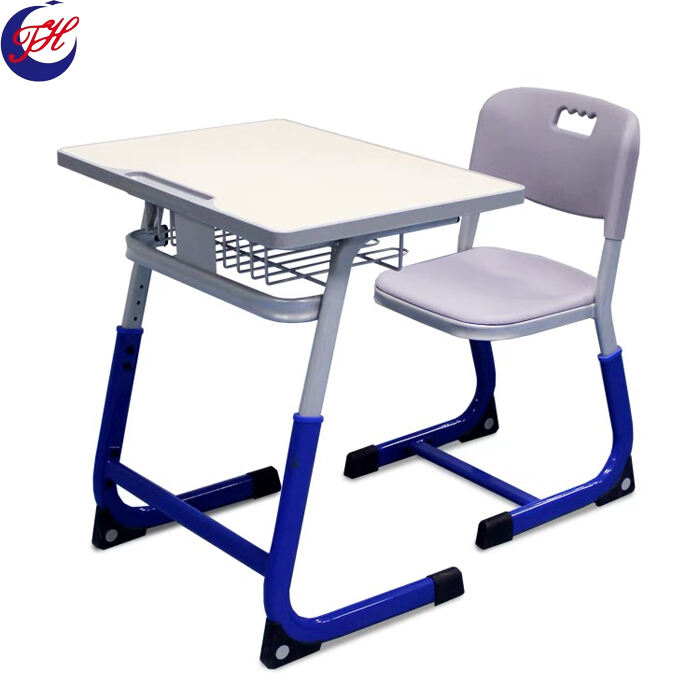
Ergonomic Requirements for Student Desk and Chair Sets
The Importance of Adjustable Desk and Chair Sets for Growing Students
Kids need adjustable desks and chairs because their bodies change so fast as they grow. Most kids between six and fourteen years old shoot up about two to three inches every year, which means regular school furniture just doesn't cut it anymore. There's actually an official standard called BS EN 1729 Part 1 from 2007 that lays out rules for how classroom furniture should be designed to keep kids from developing bad posture problems later on. This guideline has been picked up by schools across twenty eight different countries around the world. When students use desks that can be adjusted along with proper footrests, it helps them sit with those important right angles at both knees and elbows. Teachers have noticed this setup cuts down on back pain when kids spend time doing homework or taking tests, with some studies showing as much as a thirty four percent reduction in discomfort.
Health Standards and Ergonomic Design in Classroom Furniture
Modern classroom furniture must meet three core safety criteria:
- Rounded edges to reduce collision injuries by 47% (ZOI Fun School Furniture 2023)
- Non-toxic materials compliant with REACH chemical safety regulations
- Load-bearing capacity exceeding 100 kg for long-term durability
A 2023 study of 12,000 classrooms found that schools using BS EN 1729-certified desks reported 62% fewer student complaints of back pain compared to those using non-compliant furniture.
Supporting Proper Posture to Reduce Fatigue and Improve Focus
Well-fitted desk and chair sets promote healthy posture through:
- Lumbar-supporting backrests for neutral spine alignment
- Feet flat on the floor or footrests to stabilize pelvic position
- Forearms parallel to the desktop to minimize upper-body strain
These adjustments reduce muscle fatigue by 41%, which correlates with a 22% increase in focus duration during lessons, according to ergonomic research from the University of Michigan (2022).
Key Features of an Ergonomic Study Chair for Prolonged Learning
| Feature | Purpose | Ideal Specifications |
|---|---|---|
| Adjustable seat depth | Accommodates leg length variations | 14-18" range |
| Contoured backrest | Supports natural spinal curvature | 15-17" lumbar prominence zone |
| Waterfall seat edge | Improves circulation in lower extremities | 2-3" downward slope |
Chairs with breathable mesh backs and 360-degree swivel bases enhance comfort during full-day use and encourage subtle postural shifts, reducing stiffness and fatigue.
Matching Desk and Chair Sets to Age and Grade Level
Size Guidelines for Desk and Chair Sets From Grades K-8
Properly scaled furniture aligns with student anthropometrics. Kindergarteners require desks 18-22" high and seats 10-12" deep, while middle schoolers need taller configurations. Research shows 27% of schools using age-specific furniture report improved student posture (School Facilities Journal 2023). Recommended ranges include:
| Grade Level | Desk Height Range | Seat Depth Range |
|---|---|---|
| K-2 | 18-22" | 10-12" |
| 3-5 | 22-26" | 12-14" |
| 6-8 | 25-30" | 14-16" |
Adjustable furniture is especially critical between grades 4-8, when students experience average growth spurts of 2.5" annually. Classrooms using three-stage adjustable systems report 31% fewer posture-related complaints than those with fixed-size sets.
Height, Reach, and Proportion: How to Fit Furniture to Student Size
Optimal ergonomic alignment requires:
- 90° knee angle (seat height 20-22" depending on leg length)
- Desktop positioned 1-2" above flexed elbow height
- Desk depth no greater than 60% of average arm length (16-20" for K-8)
- Chair width allowing 1-1.5" clearance from hip bones to armrests
- Desktop within 25° of eye level to minimize neck flexion
Classrooms following these proportional guidelines see a 40% reduction in fidgeting during extended writing tasks. Schools that upgraded to proportionally scaled furniture documented 18% faster task completion rates in standardized testing environments.
Durability, Materials, and Long-Term Value of Classroom Furniture
Materials and construction that ensure durable desk and chair sets
Classroom furniture endures daily wear from heavy use, spills, and constant movement. Material choice significantly impacts lifespan:
| Material | Ideal Use Case | Key Strength | Average Lifespan |
|---|---|---|---|
| Powder-coated steel | Frames & joints | Resists corrosion/rust | 15-20 years (EDU Facility Report 2023) |
| High-density plastic | Seat shells & tabletops | Withstands impacts/scratches | 8-12 years |
| Reinforced plywood | Desktop cores | Warp-resistant under load | 10-15 years |
Schools prioritizing durable materials and robust construction reduce replacement cycles by 40% compared to budget-focused purchases.
Balancing comfort and resilience in high-traffic classroom environments
Durable furniture must support students for six or more hours daily without sacrificing comfort. Contoured plastic seats with rounded edges prevent pressure points and resist graffiti. Scratch-resistant laminate desktops withstand repeated marker use and erasing, maintaining functionality over time.
Case study: How durable furniture reduces maintenance costs in schools
A three-year study of 12 middle schools found that classrooms equipped with commercial-grade desk and chair sets reduced annual repair costs by $28 per student. Districts using furniture with reinforced corner braces and chemical-resistant finishes saved $740,000 over ten years (2024 Facilities Efficiency Report).
Optimizing Classroom Layout with Flexible Desk and Chair Configurations
Modular desk and chair sets for dynamic and flexible learning spaces
Classrooms these days really need furniture that can keep up with all the different ways teachers want to arrange their spaces. Think about those modular setups with wheels that won't roll away, connectors that snap together easily, and pieces that stack neatly when not in use. Teachers can switch things around super fast between traditional row setups and small group arrangements within just a few minutes. According to some research published last year, schools that switched to these flexible systems saw their setup times drop dramatically from around 15 minutes down to about 4 minutes. What makes these systems work so well? Let's look at what they typically offer:
- Trapezoidal desks with magnetic edges for secure group formations
- Lightweight chairs (under 8 lbs / 3.6 kg) for safe student handling
- Height-adjustable tables suitable for grades 3-8
Designing collaborative and individual zones through smart space planning
Strategic placement of mobile furniture creates distinct learning zones without permanent barriers. Examples include:
| Zone Type | Furniture Configuration | Activity Focus |
|---|---|---|
| Collaboration Hub | Circular arrangements of 6 desks | Group problem-solving |
| Focus Pods | Single desks with study carrels | Standardized testing |
| Tech Stations | L-shaped tables with power banks | Digital assignments |
Schools implementing zoned layouts reported 27% fewer disruptions during independent work periods (Education Space Utilization Report, 2022). This approach is particularly effective in mixed-grade settings, enabling concurrent small-group instruction and self-paced learning.
FAQ
Why are adjustable desks and chairs important for students?
Adjustable desks and chairs accommodate rapid physical growth in students, enabling them to maintain proper posture, reduce back pain, and stay comfortable throughout their school day.
What health standards should classroom furniture meet?
Classroom furniture should have rounded edges, be made of non-toxic materials in line with REACH regulations, and have a load-bearing capacity of over 100 kg for durability.
How can ergonomic furniture support better focus?
Ergonomic furniture with lumbar support, proper seat height, and aligned armrests reduce muscle fatigue, helping students focus better and longer during lessons.
What are the ideal furniture specifications for different grade levels?
Kindergarten desks should be 18-22" high with 10-12" seat depth, while desks for middle schoolers should be 25-30" with 14-16" seat depth. Furniture should be adjustable as students grow.
How does durable furniture impact school maintenance costs?
Durable furniture reduces maintenance and replacement costs significantly, as shown in studies where schools saved large sums through reduced repair needs.