 EN
EN

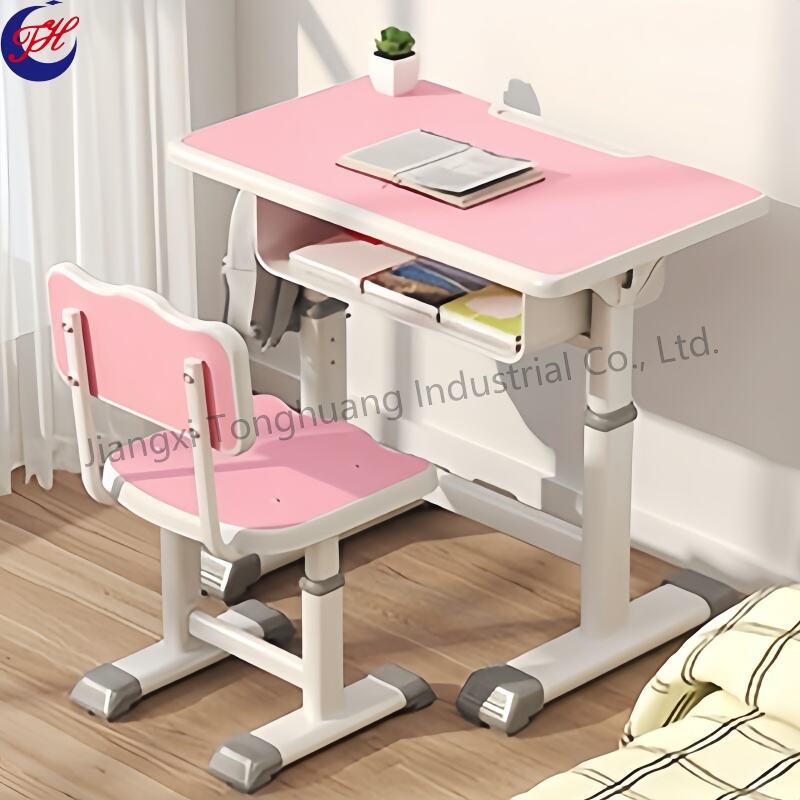
Why Ergonomic Studying Chair and Table Design Is Foundational for Student Well-Being
Spinal alignment, blood flow, and cognitive readiness: The biomechanical link to learning
Getting the spine right when sitting at study desks helps keep the pelvis in a natural position and supports the lower back curve, which stops discs from getting squashed and cutting off blood flow. Less blood reaching the brain means about 15% drop in oxygen supply after sitting for long periods according to research published in Biomechanics Journal last year. That kind of reduced oxygen actually slows down how quickly we process information. Students who sit in properly designed study chairs and work at appropriately sized tables tend to stay focused longer and experience fewer headaches from poor posture.
- Vertebrae remain stacked to minimize muscular fatigue
- Unrestricted blood vessels sustain cognitive stamina
- Neutral head position keeps visual focus aligned with learning materials
This biomechanical synergy transforms passive sitting into an active readiness state—freeing mental resources for academic tasks instead of compensating for physical discomfort.
Anthropometric mismatch in classrooms: Why most studying chairs and tables fail students aged 6–18
Standardized classroom furniture ignores critical growth variations across age groups, creating dangerous postural adaptations. Research shows 78% of students aged 8–14 use chairs with seat depths exceeding their thigh length, forcing slumped positions that compress the diaphragm and impede breathing. Common mismatches include:
| Age Group | Primary Mismatch | Resulting Posture |
|---|---|---|
| 6–10 yrs | Chair height > popliteal height | Feet dangling, reduced circulation |
| 11–14 yrs | Table depth > functional reach | Forward trunk lean, spinal loading |
| 15–18 yrs | Seat width < hip breadth | Asymmetrical weight distribution |
This anthropometric disconnect explains why students frequently shift positions—a subconscious response to pressure points and restricted movement that fragments attention spans. Adjustable studying tables and chairs with proportional scaling eliminate these mismatches by accommodating developmental physiology.
Adjustability in Studying Chairs and Tables: Matching Growth, Posture, and Task Demands
Height-adjustable desks and chairs for developmental stages—from elementary to high school
Students aged 6–18 experience significant physiological changes, necessitating furniture that adapts to evolving anthropometry. Fixed-height setups create mismatches where 74% of pupils use ill-fitting desks—causing spinal strain and restricted circulation (Ergonomics in Education Report, 2023). Height-adjustable studying chairs and tables solve this through incremental modifications:
- Seat heights calibrated to support growth spurts in adolescents
- Table surfaces aligned with elbow height to prevent shoulder hunch
- Integrated footrests for younger children whose legs dangle
This adaptability sustains neutral spinal alignment across developmental phases—and longitudinal studies show it reduces discomfort-linked absenteeism by 31%.
Dynamic sitting support and task-based positioning (reading, writing, digital learning)
Effective studying demands posture variation across learning activities. Static seating compromises focus during prolonged tasks, whereas dynamic features enhance engagement:
- Lumbar mechanisms that adjust to support forward-leaning during writing
- Seat tilt options that promote circulation during digital sessions
- Table angle customization optimized for textbook reading versus tablet use
fMRI research reveals such micro-adjustments lower physical distractions, enabling 23% longer concentration spans (Applied Ergonomics, 2018). Task-optimized positioning further reduces cognitive load by stabilizing core muscles during memory-intensive work—directly boosting information retention.
From Comfort to Cognition: How Proper Studying Chair and Table Use Boosts Focus and Retention
fMRI and classroom studies: Reduced physical distraction correlates with 23% longer sustained attention
Brain scans show when someone experiences physical discomfort, it actually lights up the parts of the brain responsible for processing pain, which takes away focus needed for learning stuff. Some classroom experiments back this up too. Students sitting at desks designed with ergonomics in mind can stay focused on their work about 23 percent longer compared to those in regular old classrooms according to a study published in Applied Ergonomics back in 2018. When people don't have to keep adjusting how they sit or stand, their brains free up space to tackle harder topics. And guess what happens? Test scores go up, understanding gets better, and students actually seem more interested in what they're studying rather than just going through the motions.
Lower cognitive load and improved memory encoding through postural stability
When someone sits properly in ergonomic furniture, their brain doesn't have to work so hard just to stay balanced. This frees up mental space for actually processing what they're learning. Studies show that when people sit upright rather than slouching, blood flows better to the brain about 15 to maybe even 20 percent more efficiently. Better blood flow means more oxygen gets delivered where it matters most for forming memories. Students who maintain good posture tend to take in complicated material without getting as tired mentally during study sessions. There's solid research backing this up too. Good posture while studying helps build stronger connections in the brain that last longer, which translates into real improvements in grades and test scores over time.
FAQs
Why is ergonomic furniture important for students?
Ergonomic furniture is vital as it promotes proper posture, enhances blood flow to the brain, increases cognitive readiness, and ultimately improves focus and information retention.
What is the impact of mismatched furniture in classrooms?
Mismatched furniture can lead to poor posture, restricted breathing, and fragmented attention spans, affecting students' ability to focus and learn effectively.
How do adjustability features in studying tables and chairs benefit students?
Adjustability allows furniture to adapt to students' growth and task demands, ensuring proper spinal alignment, reducing discomfort, and enhancing engagement and productivity.
Can ergonomic designs improve academic performance?
Yes, by reducing cognitive load and physical distractions, ergonomic furniture can improve focus, memory encoding, and overall academic performance.