 EN
EN

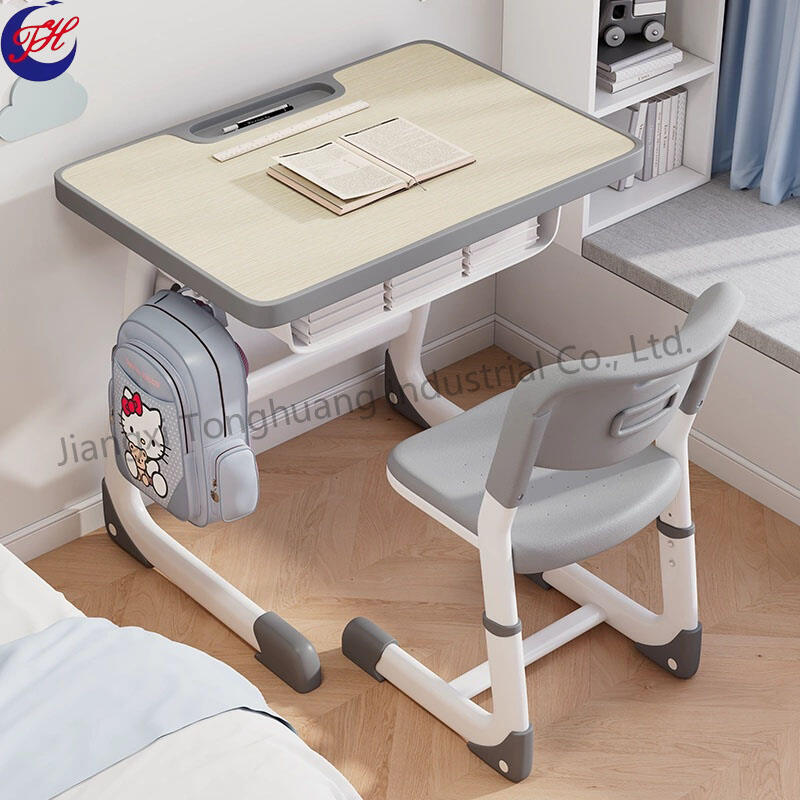
ASTM F963 Compliance: Chemical and Mechanical Safety for Student Study Table with Chair
Why ASTM F963-23 Is Non-Negotiable for Exporting Student Study Table with Chair
The ASTM F963-23 standard has become essential when shipping student desks with chairs into North America and other connected markets. Customs officials across around 37 different countries will flat out reject any shipment that doesn't come with proper certification documents. Missing this requirement can lead to serious problems down the road. Companies have spent an average of about $740,000 each time they had to recall products because of compliance issues according to research from Ponemon Institute back in 2023. What makes ASTM F963-23 different from regular furniture regulations is its focus on risks facing kids under age 14. The standard requires independent testing for things like harmful chemicals in paint finishes as well as physical aspects such as how stable the furniture stands and whether there are tiny components that could pose choking hazards. For businesses aiming at schools worldwide, following this standard isn't just paperwork it's actually the starting point for building consumer confidence, getting into new markets, and most importantly keeping children safe while they learn.
Key Testing Requirements: Lead Limits, Sharp Edges, and Choking Hazards
ASTM F963-23 verification focuses on three core physical and chemical risks unique to children's use:
- Lead Content: Surface coatings must contain ≤90 ppm soluble lead—a threshold 60% stricter than general consumer goods limits; substrates are held to the same limit under CPSIA-aligned enforcement.
- Physical Hazards: All accessible edges and points undergo impact and force testing; sharp points must resist penetration under ≤4.5 lbf pressure without fracturing.
- Small Parts: Any component detachable by a 25N force is assessed in the standardized choking hazard cylinder (Ø1.25" × 2.25").
Annual re-testing is required for high-wear components like chair glides, drawer pulls, and adjustable mechanisms. Non-specialized manufacturers report failure rates exceeding 22% in initial audits (Global Safety Journal 2023), underscoring the need for design-integrated compliance—not post-production testing alone.
ASTM F2057 Anti-Tip Standards: Stability and Anchoring for Student Study Table with Chair
The Real Risk: Tip-Over Incidents and Why Height & Stability Matter
Any furniture standing taller than 30 inches needs to follow ASTM F2057 safety standards for preventing tipping accidents. This includes those student desks raised off the ground with built-in seats or separate chairs nearby. The physics matter too: bigger furniture packs a punch when it falls. Take a standard 36 inch desk versus something shorter at 28 inches – tests show the taller one hits the floor with about 40 percent more force if someone applies similar pressure. Safety labs actually recreate what happens in classrooms every day – kids scaling furniture, resting their weight against open drawers, grabbing at shelf edges. Products that pass these tests cut down on tipping problems by around two thirds compared to regular furniture. For manufacturers, this means designing with lower centers of gravity and wider bases isn't just good practice anymore. It's become absolutely necessary for keeping students safe.
Design & Certification Essentials: 15° Tilt Test, Anchoring Kits, and Labeling
To get certified, products need to pass what's called the 15 degree tilt test with a 50 pound weight placed right at the tallest part of the unit. This basically mimics those unpredictable classroom forces that can reach around 200 Newtons. When it comes to anchoring kits, they have to hold up against at least a 100 pound pulling force. Plus, these kits should come with mounting hardware that works across different surfaces like concrete walls, drywall, and wooden structures. Warning labels are another important requirement. These permanent labels need to be positioned no more than three inches down from the top edge and clearly explain how to install the product properly along with warnings about what happens if someone skips the anchoring step altogether. Independent laboratories check everything out using several methods including repeated load tests over 500 times, analyzing materials under stress, and measuring how much the product bends during use. And let's not forget about paperwork either. Lack of proper anti-tip documentation continues to be the number one reason why shipments get stuck at customs checkpoints according to latest Consumer Product Safety Commission data showing that nearly four out of five rejected items had issues with their safety documentation.
CPSC, CPSIA, and Harmonized Global Requirements for Export-Ready Student Study Table with Chair
From US CPSIA to EU EN 14073-1: Unified Rules for Tracking Labels and Third-Party Testing
Global export readiness hinges on harmonizing U.S. CPSIA mandates with EU EN 14073-1 (furniture stability for children) and related frameworks. Both require permanent tracking labels and accredited third-party testing—but their scope differs meaningfully:
- CPSIA enforces ≤90 ppm lead in surface coatings (and substrates, per enforcement practice), plus mandatory testing for phthalates, heavy metals, and mechanical hazards under ASTM F963-23 and F2057.
- EN 14073-1 emphasizes structural stability, entanglement prevention, and corner/edge radius tolerances—complementing, not replacing, ASTM mechanical benchmarks.
Manufacturers benefit significantly from concurrent lab validation: a single accredited test program can satisfy both CPSIA and EN 14073-1 requirements, eliminating redundant audits and accelerating time-to-market.
Export Readiness Checklist: Lab Certification, Permanent Tracking Labels, and CPC Documentation
To ensure seamless entry across key markets, prioritize these four non-negotiable elements:
- Third-Party Lab Certification: Validated by CPSC-recognized or EU-notified bodies, covering ASTM F963-23 (chemical/mechanical), ASTM F2057 (anti-tip), and EN 14073-1 (stability).
- Permanent Tracking Labels: Laser-etched or indelible ink labels on both table and chair, listing manufacturer, country of origin, production date, and unique batch code.
- Children's Product Certificate (CPC): Required for U.S. import; must reference specific test reports and cite applicable ASTM/CPSC standards.
- EU Declaration of Conformity (DoC): Signed by the EU Authorized Representative, referencing EN 14073-1, EN 71-3 (heavy metals), and supporting test evidence.
Maintain full documentation—including test reports, labeling proofs, and certificates—for at least five years post-export, as required under both CPSIA recordkeeping rules and EU Market Surveillance Regulation (EU) 2019/1020.
FAQ
What is ASTM F963-23?
ASTM F963-23 is a standard which focuses on the chemical and mechanical safety of children's products, making it mandatory for products to undergo specific testing and documentation to ensure safety for children under the age of 14.
Why is anti-tip testing necessary for furniture?
Anti-tip testing is crucial because it reduces the risks of furniture tipping over and causing injury, especially important for taller furniture like student study tables, ensuring stability and safety in environments like classrooms.
What are the fundamental requirements for export-readiness?
Export-readiness primarily demands third-party lab certification, permanent tracking labels, children's product certificate (CPC), and EU Declaration of Conformity (DoC), which collectively help ensure compliance with both US and EU safety standards.