 EN
EN

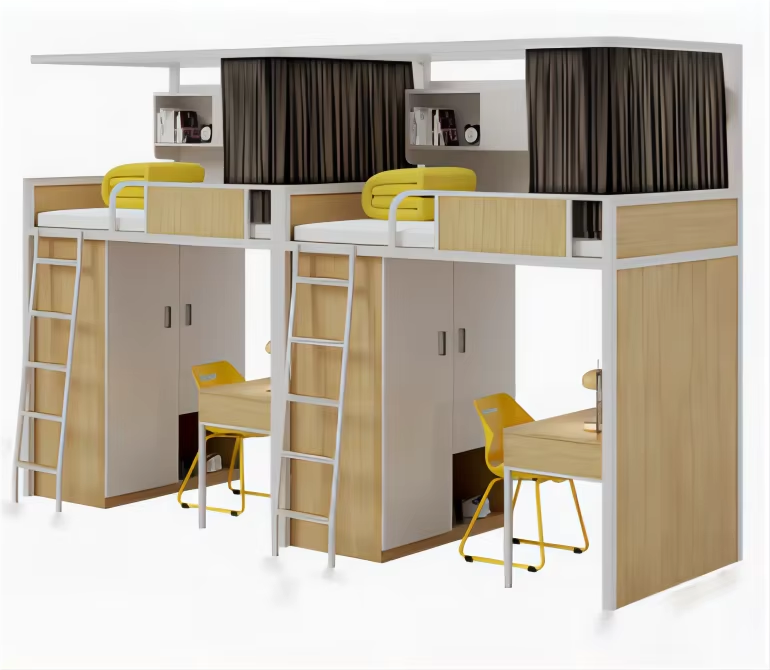
Space-Saving Bunk Bed Designs Optimized for Dormitory Constraints
Stacked bunks totally change the game for tight dorm spaces since they put sleeping spots on top of each other, freeing up precious floor room for studying or just walking around comfortably. Schools can pack in more students without needing bigger buildings, which is super important in cities where land prices run about seven hundred forty thousand dollars per student bed according to Ponemon's research from last year. The good news is these beds come in all sorts of shapes and sizes too. They fit right into weird spaces with slanted roofs or really narrow hallways that would otherwise be impossible to use efficiently.
- Low-profile units for rooms under 8-foot ceilings
- Corner-optimized L-shapes that wrap around existing infrastructure
- Integrated storage drawers beneath the lower bunk, eliminating standalone dressers
When dorm rooms come equipped with built-in shelves right next to the ladder access points, students find themselves saving time looking for their stuff since books, notebooks, and even personal items stay easily accessible. The good news is that all this extra storage doesn't weaken the overall structure at all. Most modern designs feature heavy duty frames that spread out the weight properly across the entire unit. Plus, those safety rails aren't just there for show either they actually conform to pretty strict industry standards set forth in ASTM F1427-21. College administrators who need to maximize space while still keeping living conditions comfortable often turn to bunk beds as smart solutions. Real world data shows these configurations typically allow schools to pack in around 18 to maybe even 22 percent more residents compared to older style dorms where everyone had their own private bed.
Safety, Accessibility, and Structural Integrity in Student-Grade Bunk Beds
Certified load ratings and guardrail standards for college dorm use
When it comes to student bunk beds, they need to hit much tougher safety standards than what's required for regular home use. Every model on the market follows the ASTM F1427-22 guidelines which set some pretty strict requirements. Each bed needs to handle at least 400 pounds (about 181 kilograms) of weight, and those guardrails have to be no less than five inches (around 12.7 centimeters) high from the mattress itself. The spaces between rail sections can't exceed three inches (roughly 7.6 centimeters) either so nobody gets stuck accidentally. These specs match up with the BS/EN 747:2012+A1 standard too. Before these beds ever make it into dorm rooms, independent testers check how well the welds hold together and whether the whole frame stays stable even when students jump around or move stuff around during their busy days.
Ladder ergonomics and low-entry options for universal accessibility
Accessibility features prevent an estimated 25% of bed-related incidents, according to University of Michigan research. Optimal ladder design includes:
- Angled rungs spaced 10–12 inches (25–30 cm) apart with non-slip surfaces
- Integrated handrails extending 3.5 feet (107 cm) above the top bunk
- Low-entry configurations with 20-inch (51 cm) clearance—supporting mobility-impaired users
Staircase alternatives with deep treads and continuous handrails meet ADA-equivalent accessibility standards in specialized dormitory settings. Triple bunks maintain these ergonomic requirements while adding mid-level guardrails and reinforced vertical supports.
Multifunctional Bunk Beds with Integrated Study and Storage Features
Student dormitories demand furniture that maximizes limited space and supports academic life. Multifunctional bunk beds integrate sleeping, studying, and storage—reducing clutter by up to 40% in compact rooms (Space Optimization Report 2023). This unified approach transforms tight footprints into versatile living-learning environments, directly enhancing daily efficiency and resident well-being.
Under-bed storage, built-in desks, and vertical shelving—maximizing utility per square foot
Storage solutions underneath beds make good use of space that would otherwise go wasted, with pull out drawers or trundle options great for storing clothes and other stuff, which frees up valuable floor space. Desks built right into the bed frame create proper work areas that stay put without needing extra furniture pieces scattered around. For vertical storage, shelves can be mounted either overhead or along the sides, perfect for keeping books, laptops, and personal belongings organized while making the most of available wall space. When combined, all these different storage approaches really transform how much room feels available in small spaces.
- Increase usable functional space by over 30% per bed unit
- Enable seamless transitions between studying and sleeping
- Support a consistently tidy environment—proven to improve focus and comfort
This intentional design philosophy ensures every inch contributes meaningfully to student productivity—making multifunctional bunks a high-impact solution for high-density dormitories.
Scalable Configurations: Triple, L-Shaped, and Modular Bunk Bed Systems
College dorms have serious space issues that require furniture that can adapt and grow with changing needs. The triple tier beds stack people vertically instead of taking up more floor space. Those L shaped units work wonders in those weird corners where nothing else fits, adding storage spots where students need them most. Modular systems are probably the best bet for the long haul since they can start as simple loft beds and then connect together when more students move in or when the dorm layout changes over time. Schools that actually put these flexible options into practice often see around a third less crowding problems than traditional dorm setups manage to handle.
Triple bunk beds: When density demands don’t compromise code compliance or comfort
Triple bunk beds deliver maximum vertical efficiency in high-capacity dormitories—but only when engineered for safety, accessibility, and sustained comfort. Key requirements include:
- Minimum 10-foot ceilings to ensure safe headroom clearance
- Reinforced frames rated for >500 lb per tier
- Full-length guardrails meeting ASTM F1427-22 standards
- Angled ladders with 3-inch wide, non-slip rungs for secure climbing
Structural integrity is maintained through structured wood or aircraft-grade aluminum frames that eliminate sway, while thoughtful bedding zones preserve rest quality. These tiered units house three students within a single footprint—yet still allocate 28 inches of personal space per occupant, a benchmark essential for long-term habitability and regulatory compliance.
FAQs
Why are bunk beds popular in dormitories?
Bunk beds are popular in dormitories because they save significant floor space, allowing for more students to be accommodated without expanding building size. They help institutions manage space efficiently, especially in urban areas where land prices are high.
What safety standards do student bunk beds adhere to?
Student bunk beds comply with strict safety standards such as the ASTM F1427-22 guidelines. These standards require a minimum load capacity of 400 pounds and specific guardrail dimensions to prevent accidents.
Are bunk beds suitable for students with accessibility needs?
Yes, modern bunk bed designs include features such as angled ladders, handrails, and low-entry configurations to aid accessibility for students with mobility impairments.
What multifunctional features can bunk beds offer?
Multifunctional bunk beds can have built-in storage drawers, desks, and shelving, maximizing utility and creating versatile environments for studying and living.
How do triple bunk beds comply with safety and comfort requirements?
Triple bunk beds are engineered with reinforced frames and full-length guardrails to meet safety standards while providing an efficient use of space without compromising comfort.